
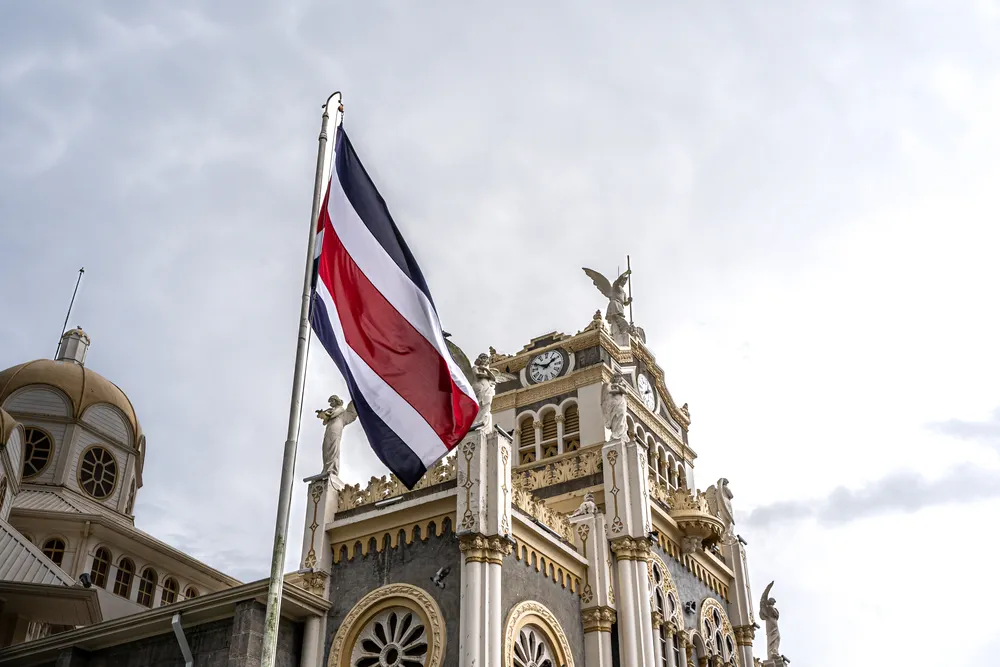
Most people think they already know Costa Rica. They picture rainforests, sloths, beaches, and the phrase pura vida, then assume that is the full story. But that surface level understanding misses what actually makes the country extraordinary and why so many travelers, researchers, and remote workers keep returning.
When you only rely on stereotypes, you overlook the deeper realities. You miss how a small nation protects more biodiversity than most continents. You miss why Costa Rica ranks among the happiest countries on Earth. You miss the cultural choices, environmental policies, and historical decisions that quietly shaped a country unlike anywhere else. Without these details, Costa Rica becomes just another tropical destination instead of a place with real substance and meaning.
This is where Costa Rica fun facts change everything. The facts in this guide go beyond common travel trivia and reveal the surprising truths behind Costa Rica’s nature, culture, and way of life. By understanding these lesser known details, you gain a clearer, richer perspective on why Costa Rica stands out globally and why experiencing it with context makes all the difference.
1. Costa Rica Protects Over 25 Percent of Its Land
One of the most impressive Costa Rica interesting facts is its dedication to conservation. Despite covering only about 0.03%of the Earth’s surface, the country has placed more than a quarter of its territory under national parks and protected reserves.
According to the official tourism board, Instituto Costarricense de Turismo, Costa Rica made conservation a national priority decades ago, long before sustainability became a global trend. This decision laid the foundation for modern ecotourism.
From a traveler’s perspective, this means access to pristine jungles, cloud forests, and coastlines that feel untouched. From an environmental standpoint, it explains why Costa Rica fun facts often begin with nature.
2. It Is Home to More Than 5 Percent of the World’s Biodiversity
Another standout among fun facts about Costa Rica is biodiversity density. Scientists estimate that over 500,000 species live within the country’s borders, representing more than 5 percent of all known species worldwide.
The Osa Peninsula is frequently cited by biologists as one of the most biologically intense places on Earth. Jaguars, tapirs, scarlet macaws, and even the elusive harpy eagle coexist in a relatively small area.
Costa Rica functions as a “living laboratory” for biodiversity research, a reputation that continues to attract scientists from around the world.
3. Costa Rica Has No Standing Army
One of the most surprising Costa Rica fun facts has nothing to do with wildlife. In 1948, the country abolished its military entirely, redirecting funding toward education, healthcare, and environmental protection.
This decision is often credited as a key reason Costa Rica enjoys long term political stability compared to many nations in the region. UNESCO has referenced this move as a rare example of how demilitarization can strengthen social development.
For travelers, this history explains the country’s peaceful atmosphere and strong sense of national pride.
4. “Pura Vida” Is More Than a Phrase
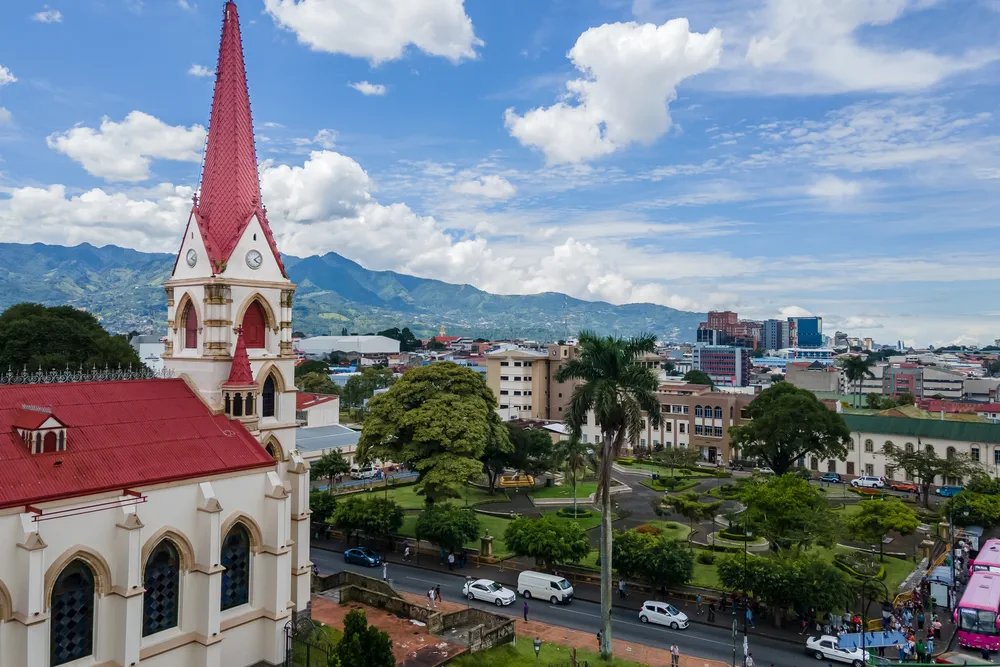
If there is one fun fact about Costa Rica visitors experience daily, it is the phrase “Pura Vida.” Translated literally as “pure life,” the phrase functions as hello, goodbye, thank you, and a general outlook on life.
Locals, known as Ticos, use it to express gratitude, patience, and optimism. Sociologists studying Costa Rican culture often cite Pura Vida as a reflection of the nation’s collective mindset rather than a slogan.
During my own visit, a delayed bus and sudden rainstorm could have been stressful. Instead, the driver smiled, shrugged, and said “Pura Vida.” That moment captured the cultural philosophy better than any guidebook.
5. Costa Rica Runs Mostly on Renewable Energy
Among the more impressive cool facts about Costa Rica is its energy model. In recent years, the country has generated over 98 percent of its electricity from renewable sources such as hydroelectric, wind, geothermal, and solar power.
Data from the World Future Council highlights Costa Rica as a global leader in clean energy adoption. This achievement aligns closely with its conservation policies and long term environmental planning.
6. The Country Has Around 200 Volcanoes
Volcanic activity plays a major role in Costa Rica’s geography. There are approximately 200 volcanic formations, with five considered active.
The most famous is Arenal Volcano, known for its near perfect cone. Though it entered a resting phase in 2010, geothermal activity continues to heat nearby hot springs, making the area one of the country’s top travel destinations.
7. Río Celeste Gets Its Color From Science, Not Magic
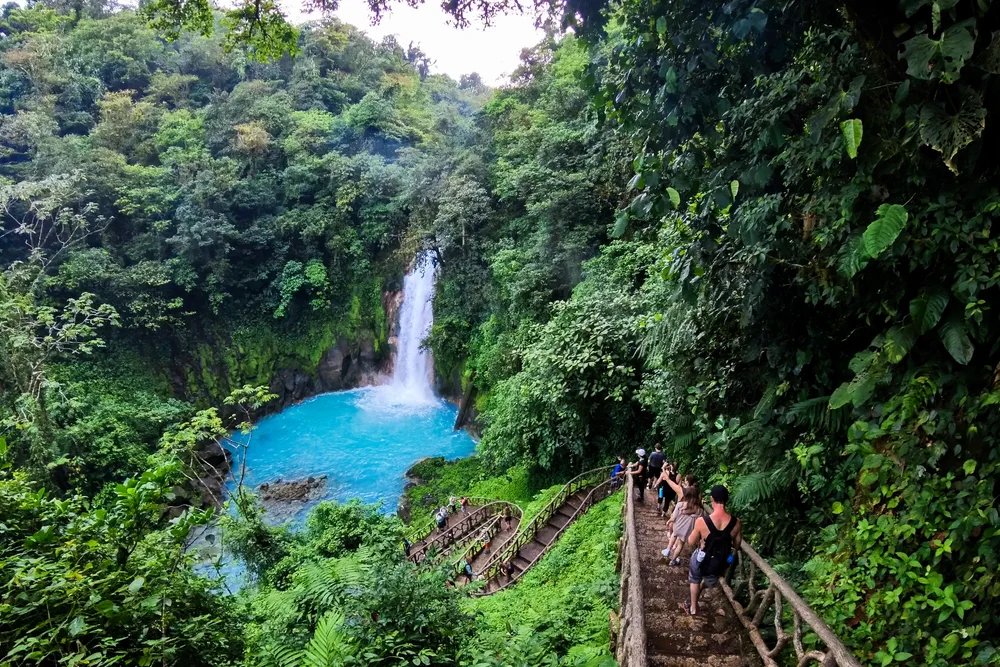
At first glance, the bright blue waters of Río Celeste seem almost unreal. While many assume the color is due to algae or minerals alone, scientists have confirmed it results from a unique chemical reaction between volcanic minerals that scatter light in a way that creates the turquoise hue, making it one of the more scientifically grounded interesting facts about Costa Rica.
8. Sloths Have Their Own National Day
Few animals are as closely associated with the country as sloths. One delightful Costa Rica fun fact is that October 20 is officially celebrated as Sloth Day.
Wildlife experts emphasize that sloths play an important role in forest ecosystems by contributing to nutrient cycles. Their popularity has also helped boost conservation awareness globally.
9. Costa Rica Has Coastlines on Two Oceans
Geographically, Costa Rica is bordered by both the Pacific Ocean and the Caribbean Sea, offering more than 800 miles of coastline.
Beaches like Manuel Antonio National Park consistently rank among the world’s best, not just for beauty but for accessibility to wildlife. It is one of the rare places where you can see monkeys, sloths, and tropical birds within walking distance of the beach.
10. Literacy Rates Are Among the Highest in Latin America
Education is another area where Costa Rica stands out. With a literacy rate of around 97 percent, the country ranks among the highest in Latin America.
UNESCO educational reports often highlight Costa Rica as a case study in how long term investment in education pays off socially and economically. This statistic is frequently overlooked but remains one of the most meaningful Costa Rica interesting facts.
11. Costa Rica Regularly Ranks as One of the Happiest Countries
International happiness indexes consistently place Costa Rica near the top. Researchers attribute this to strong community bonds, access to nature, and a cultural emphasis on work life balance.
A social scientist interviewed by the BBC once explained that Costa Rica measures success differently, prioritizing wellbeing over purely economic growth. This mindset ties directly back to Pura Vida and the absence of a military.
12. Digital Connectivity Is Strong for Travelers
Modern travelers are often surprised by how connected Costa Rica is. High quality mobile networks make it easy to work remotely, navigate cities, or stay in touch with family.
Many visitors choose esim costa rica solutions to stay connected without physical SIM cards. This option aligns well with the country’s reputation for convenience and forward thinking infrastructure, especially for short term travelers and digital nomads.
Why These Costa Rica Fun Facts Matter for Travelers
Understanding these Costa Rica fun facts goes beyond trivia. They explain why the country feels different from many other destinations. Conservation policies shape the landscapes you explore. Cultural values influence daily interactions. Investments in education and clean energy affect safety, infrastructure, and quality of life.
For travelers, these insights lead to more meaningful experiences. For researchers and educators, Costa Rica offers a real world example of how policy choices shape national identity.
Final Thoughts
From biodiversity and volcanoes to happiness and digital connectivity, these Costa Rica fun facts reveal a country that consistently punches above its weight. Whether you are planning your first visit or simply expanding your global knowledge, Costa Rica stands as proof that small nations can lead the world in meaningful ways.

