
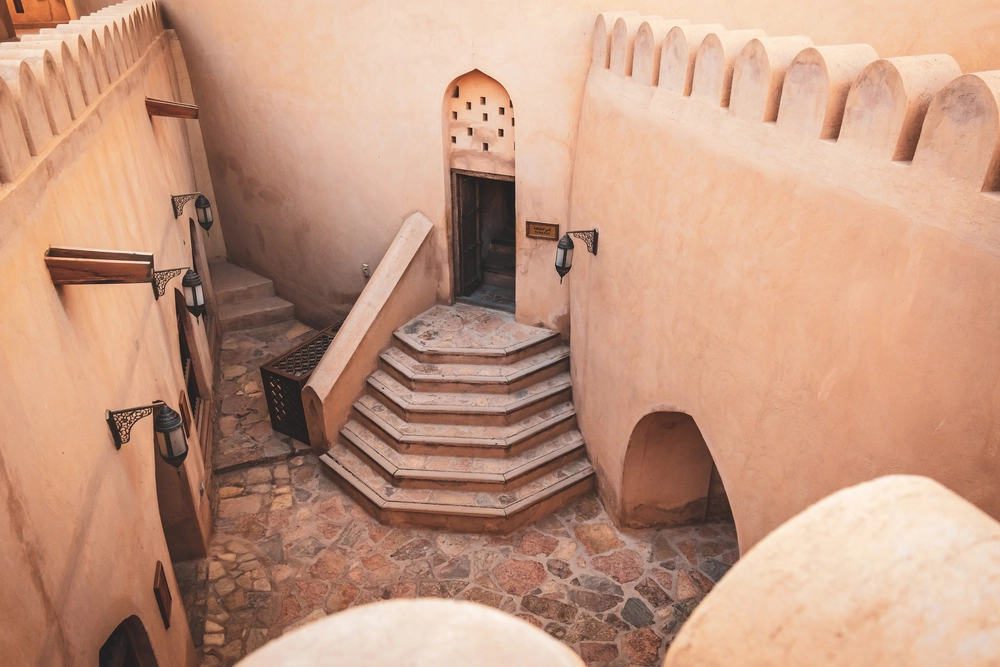
The Sultanate of Oman is often described by seasoned travelers as the best kept secret of the Middle East. Unlike the high rise glitz of its neighbors, Oman offers a grounded, authentic experience that blends ancient maritime history with dramatic natural landscapes.
Whether you are planning a quick stopover or a deep dive into the Hajar Mountains, having a well structured Oman itinerary is the key to unlocking the country’s diverse geography. From the turquoise waters of the Daymaniyat Islands to the coppery dunes of the Wahiba Sands, many of the places to visit in Oman showcase the country’s diverse landscapes.
Planning Your Journey: The Fundamentals
Before you set foot in Muscat International Airport, a few logistical details will define the success of your trip. The most common question for first timers is how many days in Oman are sufficient to see the highlights.
If you are planning carefully, this travel Oman on budget guide explains how much an Oman trip typically costs. While a three day trip provides a taste of the capital and one nearby wadi, a ten day journey allows you to traverse the desert and reach the high altitude plateaus of the interior.
Connectivity and the esim Oman Advantage
In 2026, staying connected while navigating remote mountain passes or desert tracks is a safety requirement. For most international travelers, utilizing an esim Oman plan is the most efficient choice. This allows you to bypass the long queues at airport kiosks and maintain immediate access to GPS mapping and translation tools. Having reliable data ensures you can monitor real time weather updates, which is critical for safety in a region prone to sudden environmental shifts.
Navigation and Vehicle Choice
While Muscat is easily navigable by standard sedan, venturing into the interior often requires a 4WD. This is not just a suggestion but a legal requirement for certain routes. For example, the ascent to the Saiq Plateau on Jebel Akhdar is guarded by a Royal Oman Police checkpoint that only permits four wheel drive vehicles due to the extreme steepness of the terrain.
When planning your Oman road trips, factor in that a powerful vehicle like a Toyota Land Cruiser or a Mitsubishi Pajero is necessary if you intend to cross the Wahiba Sands or tackle the technical mountain pass of Wadi Bani Awf.
The Heart of the Sultanate: Muscat and Surroundings
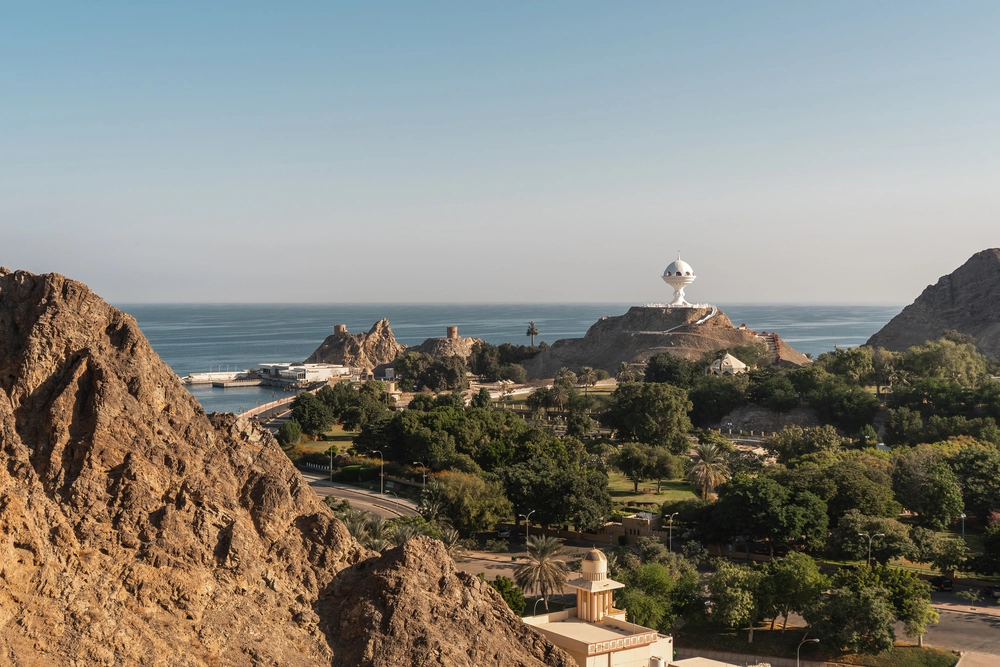
Any comprehensive Oman travel guide must begin with Muscat, where many of the best things to do in Oman combine culture, architecture, and coastal scenery. Known as a safe anchorage ringed by volcanic peaks, the capital is a sprawling coastal city that refuses to build higher than its traditional minarets.
The Architectural Grandeur of Bawshar
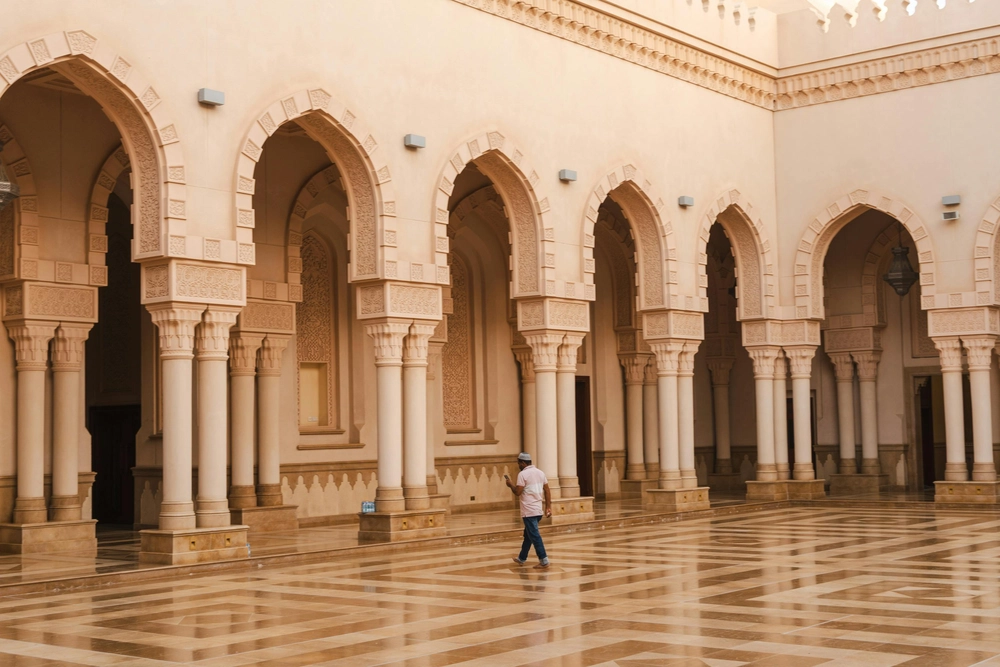
Your first morning should be dedicated to the Sultan Qaboos Grand Mosque. As a masterpiece of modern Islamic architecture, it houses a Swarovski crystal chandelier and a hand woven Persian carpet of epic proportions. It is important to remember that the mosque is only open to non Muslims from 8:00 AM to 11:00 AM, excluding Fridays. Dress modestly with arms and legs covered, and women must bring a headscarf.
The Soul of Mutrah
As the sun begins to set, head to the Mutrah Corniche. The juxtaposition of 16th century Portuguese forts, Al Jalali and Al Mirani, against the modern yachts in the harbor captures the essence of the city. Wandering through the Mutrah Souq is a sensory experience where the scent of frankincense and sandalwood fills the air.
It is a place for haggling over silver khanjars and intricate textiles. Industry experts often highlight this balance of tradition and progress. Dr. Saeed Al Batouti, an Economic Adviser to the United Nations World Tourism Organisation, recently noted that Oman is one of the best countries for adhering to the principles of sustainability while respecting the social and cultural authenticity of the local community.
The Coastal Adventure: Sur and the Wadis
Leaving Muscat behind, the road south toward the maritime city of Sur offers some of the most iconic landscapes in the country. This route is the backbone of most Oman tours, featuring a mix of geological wonders and wildlife conservation.
Emerald Pools and Hidden Caves
Wadi Shab is perhaps the most famous stop on any Oman travel itinerary. Accessing the wadi requires a short boat crossing followed by a forty five minute hike over boulders and through palm groves. The reward is a series of crystal clear pools that lead to a hidden cavern and waterfall. For a quieter experience, I recommend arriving by 8:00 AM to beat the midday heat and the larger tour groups.
A Sanctuary for Giants
Further down the coast lies the Ras Al Jinz Turtle Reserve. This is one of the world’s most significant nesting sites for the endangered green sea turtle. Guided tours are conducted at night and dawn to allow visitors to witness these majestic creatures laying eggs or hatchlings making their way to the ocean. It is a humbling experience that highlights Oman’s commitment to ecological preservation.
The Interior Heartland: Nizwa and the Mountains
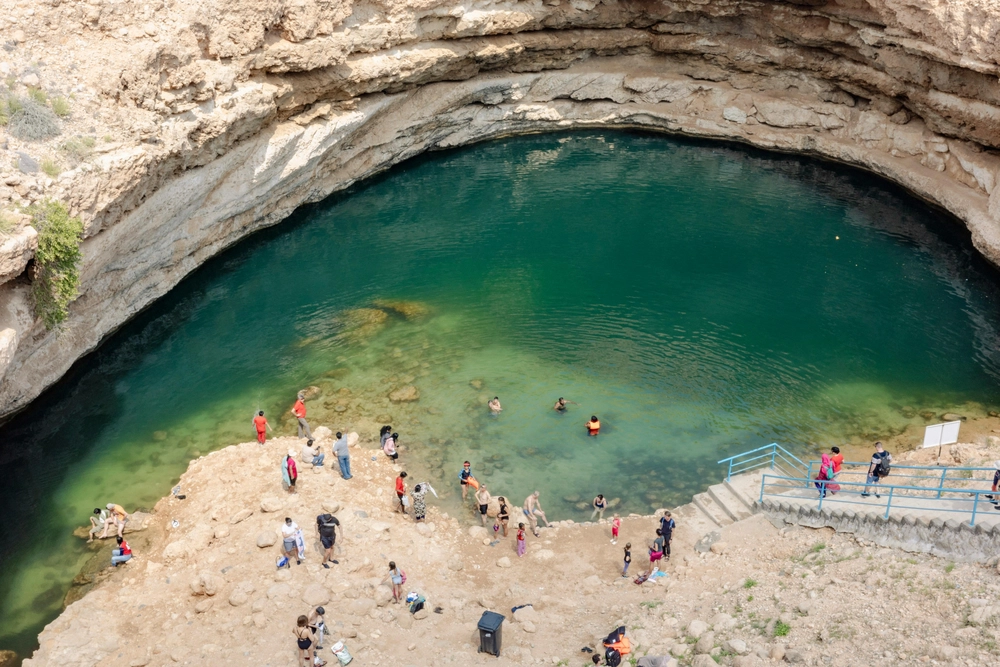
Turning inland from the coast, you enter the Dakhiliyah region, the cultural heart of the Sultanate. Nizwa, the former capital, serves as the gateway to the Hajar Mountains and the vast desert.
The Friday Goat Market
If your schedule allows, ensure you are in Nizwa on a Friday morning. The traditional livestock market begins around 7:00 AM and is a vibrant display of Omani commerce. Bedouins from the surrounding desert and farmers from the mountains gather to trade goats and cattle in a tradition that has remained unchanged for centuries. Adjacent to the market is the Nizwa Fort, recognizable by its massive circular drum tower that offers panoramic views of the surrounding date palm oases.
The Grand Canyon of Arabia
Jebel Shams, the Mountain of the Sun, is the highest peak in Oman. The primary draw here is the Wadi Ghul, a deep limestone canyon that rivals the Grand Canyon in scale. I remember standing on the edge of the Jebel Shams balcony walk at 6:00 AM, watching the first light of day hit the canyon floor thousands of meters below. The silence was absolute, broken only by the occasional call of a mountain goat. The hike to the abandoned village of Sap Bani Khamis takes about four hours and is a must for any adventure seeker.
Strategic Framework: The 3/4/5/7/8/10 Days Itinerary
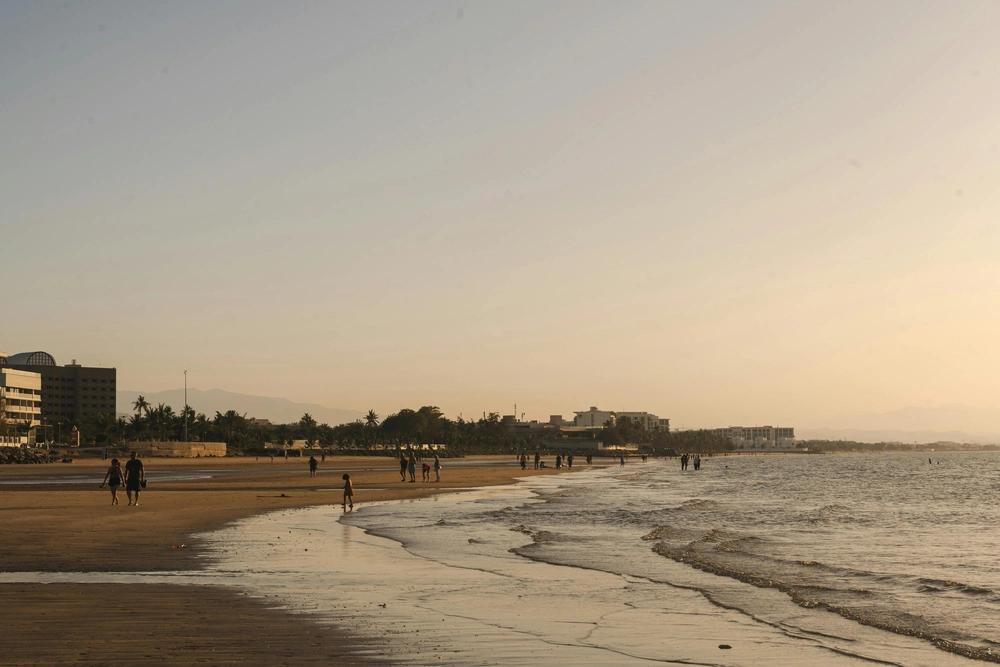
Depending on your time constraints, these skeletons help you prioritize your route.
The 3 Day Muscat Stopover
This condensed plan focuses on the capital’s cultural assets.
- Day 1: Arrival and Mutrah Corniche. Explore the souq and enjoy a seafood dinner overlooking the harbor.
- Day 2: Cultural Highlights. Visit the Grand Mosque in the morning and the Royal Opera House in the afternoon.
- Day 3: Coastal Escape. A day trip to the Bimmah Sinkhole and Wadi Shab before an evening departure.
The 5 Day Classic Loop
This is the most popular choice for those with limited time.
- Day 1 to 2: Muscat and the Daymaniyat Islands for snorkeling.
- Day 3: Coastal drive to Sur via Wadi Shab. Night at Ras Al Jinz.
- Day 4: Desert immersion. Drive to the Wahiba Sands for sunset dune bashing and a night under the stars.
- Day 5: Nizwa highlights and return to Muscat.
The 7 to 8 Day Interior Deep Dive
With a full week, you can explore the high altitude plateaus.
- Day 1 to 3: Muscat and the eastern coast.
- Day 4: Desert stay in Wahiba Sands.
- Day 5 to 6: Nizwa, Bahla Fort (a UNESCO World Heritage site), and Jabreen Castle.
- Day 7 to 8: Jebel Akhdar and Jebel Shams. Explore the terraced rose gardens of the Green Mountain.
The 10 Day Grand Expedition
This version includes the extremities of the country, such as the Musandam Peninsula or Salalah.
- Day 1 to 7: The Classic Loop plus extended time in the mountains.
- Day 8 to 10: Fly from Muscat to Khasab in Musandam. Experience a dhow cruise through the fjords, often called the Norway of Arabia. Liz Pepperell, Managing Director of Odyssey World, advises travelers to look beyond the sun and sand. She notes that the fjords in the north are ideal for scuba diving and offer frequent sightings of dolphins and whales.
Culinary Logistics: A Taste of the Desert
Omani cuisine is a fragrant fusion of Arabian, Indian, and East African influences. The national dish is Shuwa, which consists of spiced lamb or goat slow cooked in an underground pit for up to forty eight hours. This ritualistic preparation results in incredibly tender meat that is typically served on a bed of saffron rice during festivals.
For a more casual experience, look for Mishkak stands along the coastal roads in the evenings. These are marinated meat skewers grilled over charcoal and served with a tangy tamarind sauce. No meal is complete without Omani Halwa, a sweet, gelatinous delicacy made from sugar, rose water, saffron, and nuts. It is traditionally served with Kahwa, a strong cardamom infused coffee that serves as a universal symbol of Omani hospitality.
Safety and Regulations: Driving the Wadis
Driving in Oman is generally safe, with an excellent network of modern highways. However, the unique environment demands strict adherence to local laws.
The Clean Car and Wadi Crossing Laws
Oman enforces a clean car law, particularly in urban areas. Driving a vehicle that is noticeably dirty can result in a fine of approximately 10 Omani Rials. While this may seem unusual, it reflects the national pride in public order. More importantly, travelers must be aware of the severe penalties for risky wadi crossings. During the infrequent but intense rain spells in January and February, dry riverbeds can turn into lethal torrents in minutes. Under Article 49 of the Traffic Law, intentionally crossing a flooded wadi stream is punishable by up to three months in jail and a fine of 500 Omani Rials.
Seasonal Timing
The best time to execute your Oman itinerary is between October and April. During these months, temperatures range from 20 to 30 degrees Celsius, making it ideal for hiking and camping. If you choose to visit during the summer months, the only viable destination is Salalah in the south.
Between June and September, the Khareef monsoon transforms the Dhofar region into a lush green oasis with mist-covered mountains and seasonal waterfalls, offering a total ecological contrast to the rest of the country. If you want a detailed seasonal breakdown, see our guide on the best time to visit Oman.
Conclusion
Oman is a destination that rewards the curious and the respectful. It is a country where you can move from a high end luxury resort to a remote mountain village in a single afternoon. By choosing the right duration for your journey and ensuring you have the necessary tools—be it a 4WD for the peaks or an esim for connectivity—you can experience the Sultanate in its purest form.
Whether you are following a 3/4/5/7/8/10 days itinerary, the goal remains the same: to witness a culture that has mastered the balance of its ancient past and its ambitious future.


