
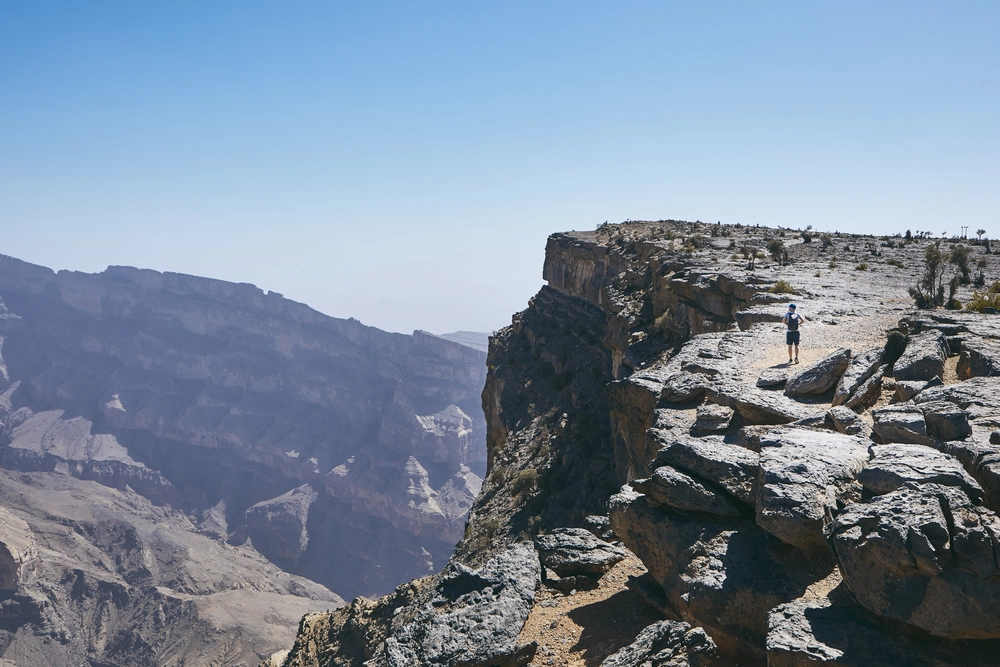
When you first arrive in the Sultanate of Oman, you immediately notice what is missing. There are no glass skyscrapers competing for the clouds, no hyper-industrialized megastructures, and no artificial islands. Instead, you are greeted by a low-rise skyline of whitewashed buildings, ancient watchtowers, and the jagged silhouette of the Hajar Mountains.
This deliberate choice to prioritize cultural preservation over vertical expansion makes the Sultanate one of the most authentic destinations in the Middle East. Whether you are looking for rugged mountain peaks or emerald green oases, the sheer variety of places to visit in Oman ensures a journey that feels more like a discovery than a typical vacation.
To truly understand this landscape, one must look at the strategic vision of the late Sultan Qaboos bin Said. His administration enforced strict building codes, capping most structures in the capital at just five or six stories. This ensures that the Sultan Qaboos Grand Mosque and the surrounding mountains remain the primary focal points of the horizon.
As Dr. Saeed Al Batouti, an Economic Adviser to the United Nations World Tourism Organization, noted in an October 2024 assessment, Oman stands as a global model for adhering to the principles of sustainability while respecting the social and cultural authenticity of the local community.
While this guide focuses on the top destinations, you can also explore our full list of things to do in Oman to discover activities and experiences across the country.
Navigating the Digital Landscape with an eSIM Oman
Before diving into the specific landmarks, every modern traveler needs to address connectivity. In Oman, traditional telecommunications can be restrictive for visitors, with many international eSIM provider websites actually being blocked within the country to protect local interests. Therefore, securing an esim Oman before you depart your home country is the smartest logistical move you can make.
Installing your digital SIM before landing allows you to bypass local restrictions on services like WhatsApp calling and ensures you have immediate access to maps as soon as you clear customs. With a reliable connection, you can navigate the winding mountain passes and desert tracks that define the best places to visit in Oman with total confidence.
15 Best Tourist Places in Oman
1. Sultan Qaboos Grand Mosque in Muscat
Any list of places to visit in Oman must begin with this architectural masterpiece. Completed in 2001, the Sultan Qaboos Grand Mosque is a sprawling sanctuary crafted from 300,000 tons of Indian sandstone. It is the only mosque in the country open to non-Muslim visitors, offering a rare glimpse into the heart of Omani faith and design.
The interior of the main prayer hall is breathtaking. It houses a hand-loomed Persian carpet that took 600 women four years to weave, alongside a massive Swarovski crystal chandelier that illuminates the space with a golden glow. Walking through the arched walkways and mosaic-tiled courtyards, you feel the “measured growth” philosophy that defines the nation. It is a place of profound silence and beauty, setting the tone for the rest of your exploration.
2. The Historic District of Muttrah
Muttrah is where the maritime soul of Muscat resides. The Muttrah Corniche, a crescent-shaped promenade, is framed by volcanic mountains and white-domed mosques. It is best enjoyed during the golden hour when the sun sets over the harbor, reflecting off the Sultan’s yachts and the traditional dhows.
Deep within the district lies the Muttrah Souq, one of the oldest marketplaces in the Arab world. This is not a sanitized tourist mall; it is a labyrinth of alleys scented with burning frankincense and sandalwood. Here, traders have measured spices and silver by hand for centuries. You can find everything from intricately carved silver khanjars to vibrant pashminas and traditional Omani attire. It remains one of the most essential tourist places in Oman for those seeking the atmosphere of old Arabia.
3. The Royal Opera House Muscat
While Oman values its past, it also embraces high culture through the Royal Opera House. Opened in 2011, this venue is a stunning blend of Arabesque and Italianate design. Even if you aren’t attending a performance by world-class artists like Andrea Bocelli, a guided tour of the building is highly recommended. The use of inlaid wood and polished marble creates a space that feels both modern and deeply rooted in local motifs. It stands as a testament to the country’s investment in “quality over quantity” for its cultural infrastructure.
4. Nizwa Fort and the Friday Cattle Market
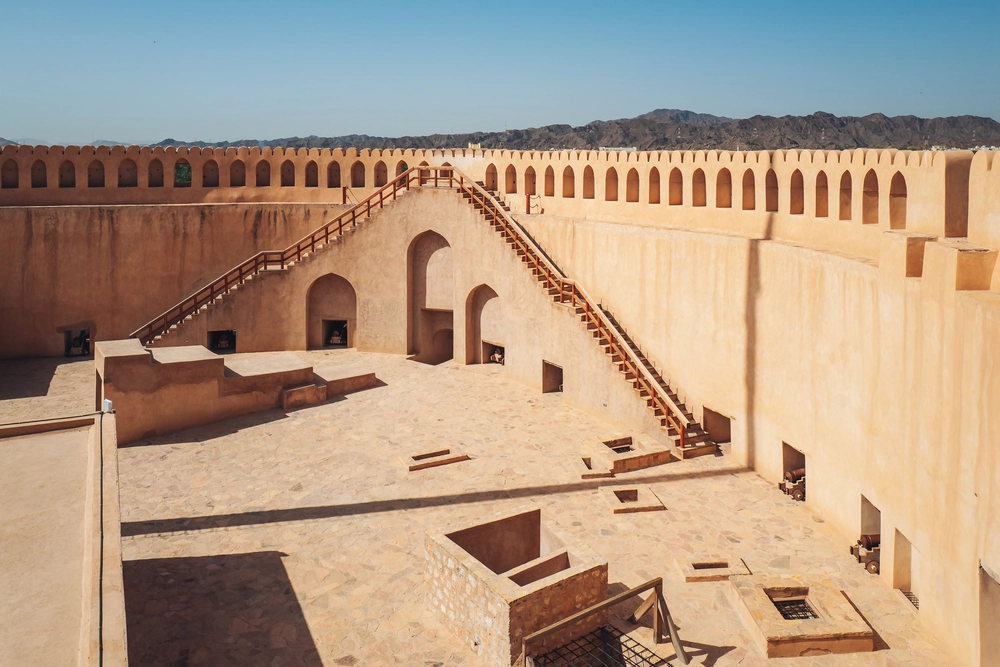
Located on a plain surrounded by the craggy peaks of the Hajar Mountains, Nizwa was once the capital of the Sultanate in the 6th and 7th centuries. The 17th-century Nizwa Fort is famous for its massive circular watchtower, designed to deflect cannon fire from historical invaders.
The highlight of any visit to Nizwa is the Friday morning cattle market. This is a visceral experience where farmers and Bedouins from the surrounding regions gather to auction goats, sheep, and cattle in a traditional circle. The dust, the shouting of bids, and the ancient rhythm of trade offer an unfiltered look at rural Omani life.
5. Jebel Shams and the Grand Canyon of Arabia
Jebel Shams, or the Mountain of the Sun, is the highest peak in the country, reaching approximately 3,000 meters. It overlooks Wadi An Nakhur, famously known as the Grand Canyon of Oman. This 1,000-meter-deep limestone gorge is one of the most stunning places to visit in Oman for hikers and photographers alike.
The most popular activity here is the Balcony Walk, a six-kilometer trail that edges along the rim of the canyon. It leads to the abandoned village of Sap Bani Khamis, which is tucked into a cliff ledge. The views are jaw-dropping, but you should be sure-footed and prepared for the altitude. Even in the height of summer, the mountain air remains cool, providing a refreshing escape from the coastal humidity.
For travelers who want to explore more mountain routes like the Balcony Walk, see our guide on hiking in Oman.
6. Jebel Akhdar the Green Mountain
While Jebel Shams is rugged and rocky, Jebel Akhdar is a verdant massif known for its terraced agriculture. Perched 2,000 meters above sea level on the Saiq Plateau, this region enjoys a Mediterranean climate that allows for the growth of pomegranates, apricots, and peaches.
The true magic happens in March and April during the Damask rose harvest. The mountain air becomes thick with the scent of flowers as locals harvest petals to distill into the world-famous Omani rosewater. Exploring the villages of Al Aqor and Sayq, you can see the traditional fire-heated stills that have been used for generations. It is undoubtedly one of the most beautiful places that stays in your memory long after you leave.
7. Wadi Shab the Hidden Paradise
For those seeking adventure, Wadi Shab is often cited as the pinnacle of Oman tourist attractions. Getting to the heart of the wadi involves a short boat ride across a lagoon, followed by a 45-minute hike through a dramatic sandstone canyon filled with aquamarine pools and date palms.
I remember my own journey into the upper reaches of Wadi Shab quite vividly. After trekking through the heat, the water felt like liquid silk. The ultimate goal is a “hidden cave” containing a secret waterfall. To reach it, you have to swim through a narrow crack in the rock, with only your head above water, until you emerge into a sun-drenched cavern where the water cascades down into a deep pool. It is a moment of pure, secluded magic that perfectly encapsulates why Oman is so special.
8. Wadi Bani Khalid
If Wadi Shab is for adventurers, Wadi Bani Khalid is for those who want accessible beauty. This is one of the most popular Oman tourist places because the large, deep pools of emerald-green water are located just a short walk from the parking area. The main pools are developed with bridges and a restaurant, making them a favorite for local families on weekends.
However, if you walk ten minutes further upstream, you will find the quieter “upper pools.” These are smaller cascades tucked under white limestone cliffs. The water is famous for its “doctor fish,” which provide a natural, if slightly ticklish, foot massage for anyone who dangles their feet into the shallows. It is a peaceful oasis where the desert heat simply melts away.
9. The Wahiba Sands Desert
Also known as the Sharqiya Sands, the Wahiba Sands represent the quintessential Arabian desert experience. These amber-colored dunes can reach heights of 100 meters and stretch for 200 kilometers toward the Arabian Sea. Staying overnight in a Bedouin-style desert camp is one of the best tourist places in Oman for stargazing.
Without the light pollution of major cities, the Milky Way feels close enough to touch. During the day, you can indulge in dune bashing in a 4WD or simply sit atop a dune to watch the sand change color from coppery orange to deep red as the sun sets. It is a landscape that demands contemplation and respect for the nomadic tribes that still call these sands home.
10. Salalah and the Khareef Season
In the far south of the country lies Salalah, a city that feels a world away from the arid north. Between late June and early September, the region experiences the Khareef, a unique monsoon season. While the rest of the Arabian Peninsula is sweltering, Salalah turns into a lush, misty tropical paradise.
The mountains turn a vibrant mossy green, and seasonal waterfalls like those in Wadi Darbat begin to flow in full force. You can visit the Mughsail Blowholes, where powerful waves erupt through the rocks in geysers of seawater. Salalah is also the historic home of the Land of Frankincense, with UNESCO-listed archaeological sites that document Oman’s ancient role in the global spice trade.
11. The Musandam Peninsula
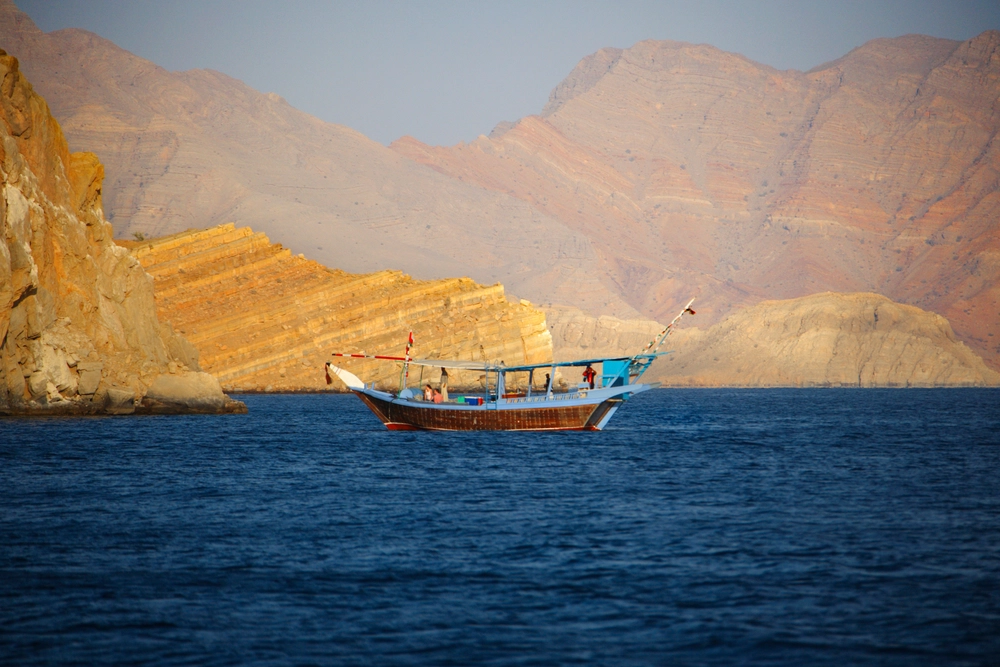
Often called the “Norway of Arabia,” the Musandam Peninsula is a rugged enclave separated from the rest of Oman by the UAE. It is characterized by fjord-like inlets called khors, where limestone cliffs rise directly from the turquoise sea.
The best way to see Musandam is from the deck of a traditional dhow. These cruises often include stops for snorkeling in secluded coves where the water is teeming with marine life. Oman’s coastline stretches for more than 3,000 kilometers. Discover more hidden coastal gems in our guide to the best Oman beaches.
It is not uncommon to see schools of dolphins jumping alongside the boat. The town of Khasab serves as the base for these adventures, offering a dramatic contrast to the more developed coastal cities of the Gulf.
12. The Maritime Heritage of Sur
Sur was once the epicenter of Oman’s maritime empire. Today, it remains famous for being the last place in the world where traditional dhows are still handcrafted using ancient techniques. Visiting a dhow factory in Sur is like stepping back in time; you can see skilled artisans working on massive wooden hulls without the need for modern power tools.
The Al Ayjah district, with its white houses and iconic lighthouse, provides some of the best photography spots in the country. Crossing the suspension bridge at sunset offers a panoramic view of the lagoon and the watchtowers that have guarded this harbor for centuries. It is one of the most authentic places to visit for those interested in seafaring history.
13. Ras Al Jinz Turtle Reserve
Just a short drive from Sur is Ras Al Jinz, the easternmost point of the Arabian Peninsula and a critical nesting site for the endangered green turtle. The reserve operates under strict environmental protections to ensure that tourism does not disrupt the nesting process.
Guided tours are available at night and dawn, allowing you to witness mother turtles laying their eggs or tiny hatchlings making their perilous journey toward the sea. It is a humbling experience that highlights the country’s commitment to wildlife conservation. As noted by many travelers, the sight of a massive turtle returning to the ocean under a moonlit sky is a memory that stays with you forever.
14. Bimmah Sinkhole
Located within Hawiyat Najm Park on the coast between Muscat and Sur, the Bimmah Sinkhole is a natural limestone depression filled with crystal-clear turquoise water. While local legends once claimed it was formed by a meteorite, it is actually a geological collapse of the underlying limestone.
It is a popular spot for a quick swim or a picnic. The park is well-maintained, and stone steps lead down to the water’s edge. It is one of the most photographed places to see in Oman, and for good reason; the contrast between the orange rock and the vibrant blue water is truly striking.
15. Bahla Fort and Jabrin Castle
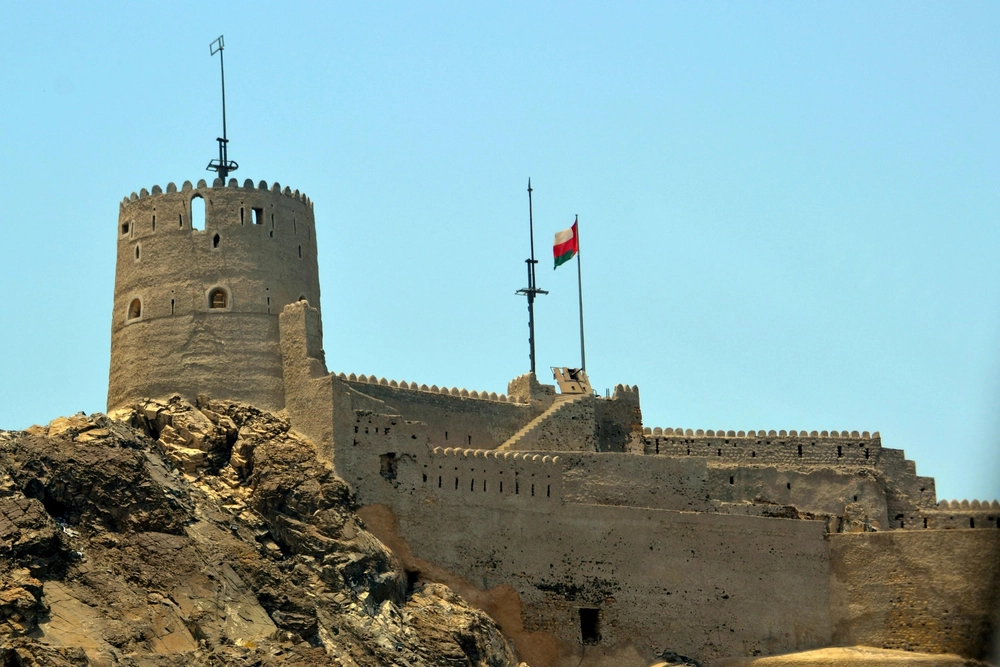
For history buffs, the interior town of Bahla is a must-visit. Bahla Fort is a UNESCO World Heritage site and one of the largest and oldest fortifications in the country. Built between the 12th and 15th centuries, its mud-brick walls and towers offer panoramic views of the surrounding date plantations.
Just a short drive away is Jabrin Castle, which is widely considered the most beautiful fortress in the Sultanate. Unlike the more rugged military forts, Jabrin was designed as a palace and a center for learning. Its interiors feature intricately painted wooden ceilings and carved windows that showcase the height of Omani artistic achievement during the late 17th century.
Strategic Tips for an Unforgettable Trip
Planning a journey to these places to visit in Oman requires some specific logistical knowledge to ensure a smooth experience. Because many destinations are spread across mountains and deserts, understanding getting around Oman is essential before starting your journey.
First, your choice of vehicle is paramount. While the highway system is world-class, reaching locations like Jebel Akhdar or the deep desert dunes of the Wahiba Sands requires a 4WD vehicle. In fact, the Royal Oman Police maintain a safety checkpoint at the base of Jebel Akhdar; if you do not have a 4WD, you will not be allowed to ascend for safety reasons.
Second, respect for local customs is essential. Oman is a conservative Muslim country, and while the people are famously hospitable, they appreciate modest dress. Both men and women should cover their shoulders and knees when in public places, especially in villages like Misfat Al Abriyeen. If you are invited to someone’s home, it is polite to accept the offered coffee and dates. According to local etiquette, you should have at least three small cups of coffee before shaking your cup to signify you have had enough.
Finally, the best time to explore the majority of the country is between October and March, when temperatures range from 24 to 28 degrees Celsius. However, if you are planning to visit the south, June to September is the time to go for the Khareef season. For a detailed seasonal breakdown, see our guide on the best time to visit Oman.
Always check the latest entry requirements; while many nationalities are now eligible for a 14-day visa-free stay, it is best to verify your status before you travel. If you want to combine these destinations into a well-planned trip, follow our suggested Oman itinerary.
A Culinary Note: The Flavors of Arabia
If you are planning your first visit, our guide to traveling to Oman covers entry procedures, transportation, and essential travel advice. No visit to the places to visit in Oman is complete without sampling the local cuisine. Omani food is a reflection of its trade history, blending spices from India, Persia, and East Africa.
Number one on your list should be Shuwa, the national dish. This involves lamb or goat marinated in a heavy blend of spices, wrapped in banana leaves, and slow-cooked in an underground sand oven for up to 48 hours. The result is meat so tender it falls off the bone. Pair this with a piece of Omani Halwa, a gelatinous sweet made with saffron, rosewater, and nuts, and a cup of bitter cardamom coffee. These flavors are the final piece of the puzzle in understanding this remarkable nation.
Oman represents a rare case of a country using its modernization to protect its heritage rather than replace it. By choosing to visit these 15 locations, you aren’t just seeing a new country; you are engaging with a culture that has mastered the art of measured growth and authentic hospitality. Whether you are trekking the Hajar Mountains or wandering the spice-scented souqs of Muscat, Oman offers a profound sense of place that is increasingly rare in our fast-paced world. With your connectivity secured and your 4WD ready, the Sultanate is waiting to reveal its secrets to you.


