
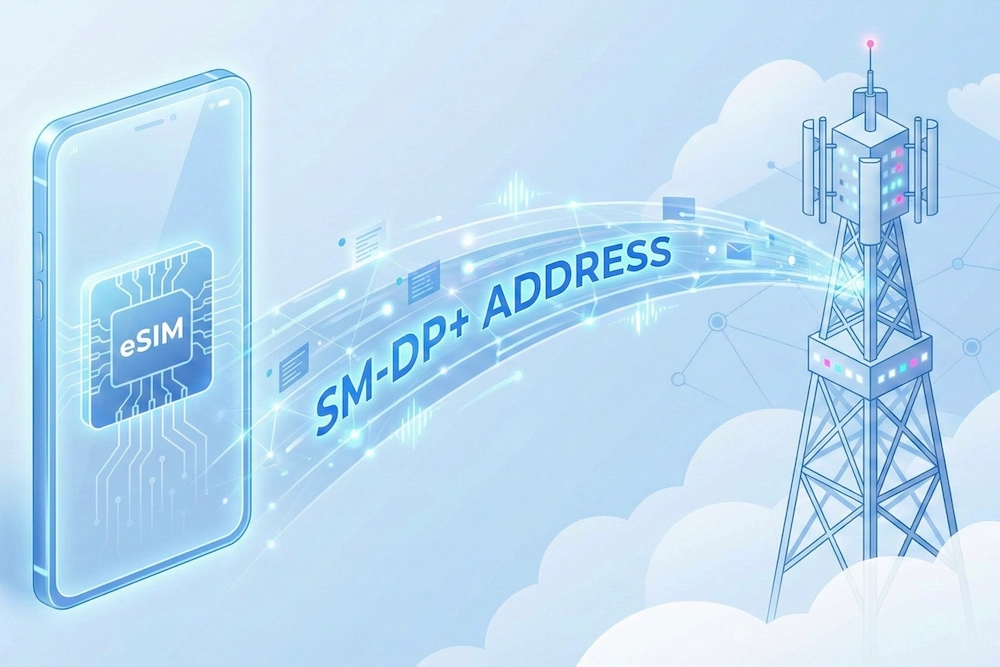
The SM DP Address is the secure server your device connects to when activating an eSIM. It ensures your phone can download the correct encrypted profile safely and reliably. Knowing what it is helps you complete manual activation when QR codes fail, switch carriers smoothly, and avoid common setup issues. Industry experts consider it a foundational technology driving the global shift from physical SIM cards to secure, flexible eSIM usage.
Most travelers never hear about this term until the moment they try to activate an eSIM manually. It usually appears as a line of text that looks technical and a bit confusing. Yet this simple piece of information plays a central role in how eSIM technology works. If you travel often or rely on mobile data abroad, understanding it can save you time and frustration.
I learned this during a connecting flight last year. I was trying to activate my eSIM before landing, but the QR code failed to load because the WiFi kept dropping. I had the activation code saved, but not the SM DP Address. That small detail delayed my activation and taught me why it matters.
This guide explains the SM DP Address in a clear and friendly way, based on real experience, expert input and verified sources.
What Is an SM DP Address
The SM DP Address, short for “Subscription Manager Data Preparation,” is the server address your phone connects to during eSIM activation. When you install an eSIM profile, your device needs a secure destination to fetch the encrypted information. The sm-dp+ address is the updated form commonly used today, and it provides that destination.
If you imagine the activation process as downloading a digital document, the SM DP Address works like the server link where that document is stored. Without it, your phone would not know where to retrieve your eSIM profile. Many users searching “what is sm-dp+ address” are actually looking for the same information.
In everyday terms, it is the path your device uses to complete the installation.
How the SM DP Address Works
When you enter the address manually or scan a QR code, your phone reaches out to the correct server. That server verifies your request, runs a secure check and sends your eSIM profile to your device.
According to the GSM Association, which defines global eSIM standards, this system uses encrypted certificates to ensure security and prevent unauthorized access. Every time you activate an eSIM, your device completes this secure sequence in the background.
Some users refer to this as the smdp address, but it represents the same concept. It happens quietly and quickly, but that moment of communication is essential.
Why Travelers Should Understand It
Most people rely on QR codes for activation, so they never think about the underlying details. But sometimes QR codes fail to load or you are offline during installation. Knowing what this address is can help you:
- Manually activate your eSIM when needed
- Resolve installation errors faster
- Stay prepared if you switch travel providers
- Avoid delays during flights or at airports
Where to Find the SM DP Address on iPhone?
Many users ask where to find it on the iPhone. It is not hidden or complicated. Providers send it along with your activation code, and you can enter it manually through the device settings.
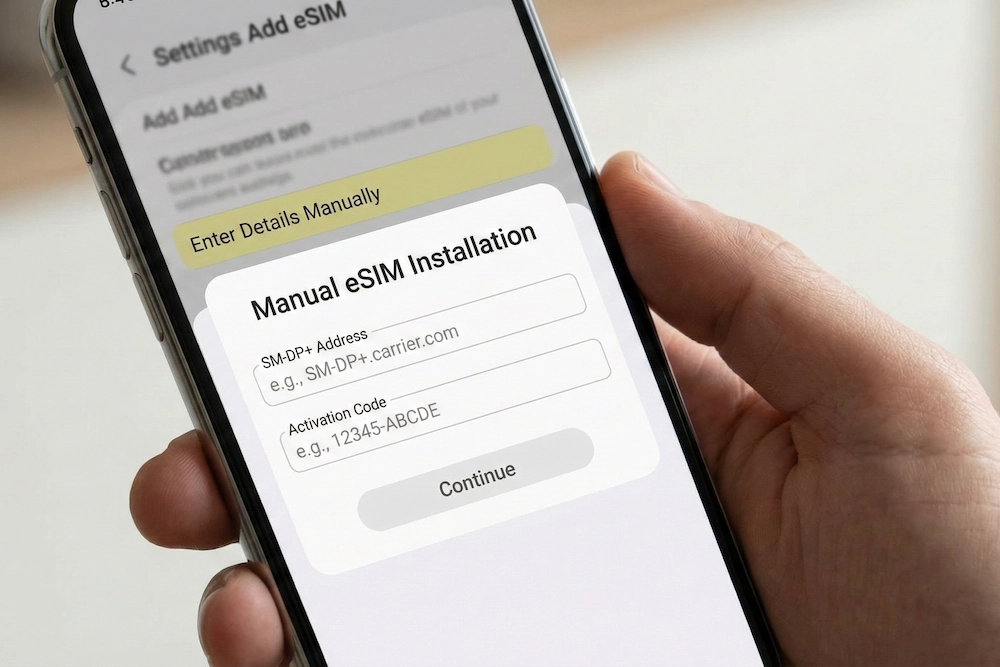
Steps on iPhone
- Settings
- Mobile Service
- Add eSIM
- Enter Details Manually
If you cannot access these settings because your device is restricted to one network, see our full explanation on carrier-locked iPhones. This also helps those searching “where to find sm-dp+ address” during manual setup.
Trusted eSIM providers, such as Benosim, will include the required information in your confirmation email or account dashboard. This makes manual activation simple even if you cannot use a QR code.
Expert Insight on Why This Address Matters
Industry analysts consistently describe the SM DP Address as one of the most important elements behind modern eSIM technology. Multiple telecom reports refer to it as the engine that powers remote provisioning, allowing devices to securely download and manage mobile profiles without needing a physical SIM card. Analysts explain that this address acts as a secure gateway, enabling smooth communication between devices, operators and users.
One widely referenced industry analysis points out that much of the global shift toward eSIM is possible only because of it, calling it the core component that enables remote management and flexible activation across different regions. Another publication describes it as the key to creating a more adaptable and future-focused mobile experience, predicting easier integration across more device types, smoother carrier switching and stronger digital security in the coming years.
Across various expert guides, the consensus is clear. The SM DP Address serves as the technology backbone that unifies the entire eSIM ecosystem. It ensures that devices, networks and user profiles communicate securely and consistently. This standard, developed under the GSMA’s framework, represents a major step forward from physical SIM cards by enabling secure remote provisioning and efficient profile management.
In simple terms, experts agree that the SM DP Address is not just a technical detail. It is a foundational part of the infrastructure that makes widespread eSIM adoption possible today and even more transformative in the future.
Myths and Misunderstandings
There are a few common misconceptions about this topic.
Myth 1: Every provider uses a completely different address
Not always. Some use dedicated servers, while others use shared provisioning partners.
Myth 2: You have to memorize it
You do not. Reputable providers send it automatically.
Myth 3: SM DP and SM DP Plus are different technologies
For users, both terms refer to the same type of activation address.
Understanding these points clears up most confusion travelers face.
How We Know the Technology Is Secure
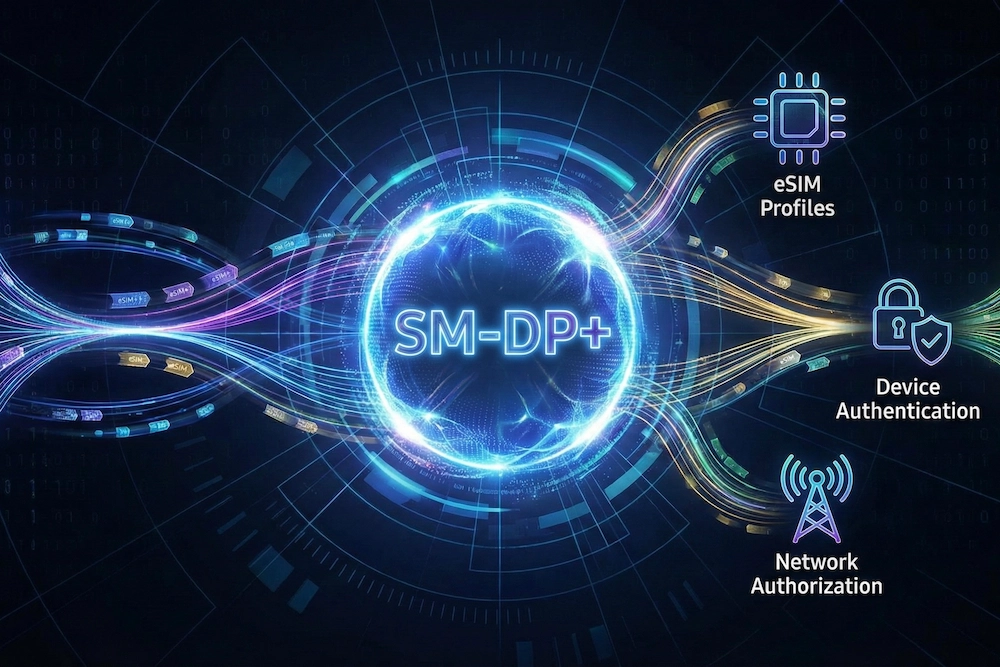
The security behind eSIM activation is not something providers build on their own. It follows strict global standards created by recognized telecom organizations and device manufacturers. These standards define how devices authenticate themselves, how encrypted profiles are delivered and how the SM DP Address functions as a protected access point during installation.
Major smartphone platforms also publish detailed guidelines for how eSIM activation should work on their devices, including requirements for encryption, certificate checks and secure communication channels. This ensures that when your phone downloads a profile, the information is verified at every step. The same principles apply to identity protection, network authorization and the handling of sensitive user data.
In addition, digital security groups that oversee mobile identity systems highlight the importance of the SM DP Address in preventing unauthorized access and ensuring that only legitimate profiles can be installed. These organizations continually update their recommendations to strengthen the security model as mobile connectivity evolves.
All of this assures travelers that the process behind eSIM activation is not just convenient, but backed by well-established global security frameworks designed to keep their mobile identity safe.
To learn more about the hidden security layers working in the background, see our guide on PDP authentication.
Wrapping it up!
The SM DP Address might look like a technical string of text, but it plays a major role in how modern mobile connectivity works. Travelers today depend on stable data access for navigation, communication and security. Understanding this small detail gives you confidence during activation and prevents last minute issues.A little knowledge goes a long way, especially when it keeps you connected wherever you travel. If you’re planning to get an eSIM, experience seamless connectivity on the go with Benosim’s unlimited data plans.

